
Repiping & Pipe Replacement · Monroe, NC
Whole-House Repiping & Pipe Replacement in Monroe, NC: When Patching Stops Working and What a Repipe Involves
One leak in an old pipe is a repair. The same line leaking again in a new spot, or a second pipe giving way a month later, is a question about the whole system. This page is about that question: when to keep patching, when to replace a run of pipe, and when a whole-house repipe is the honest answer.
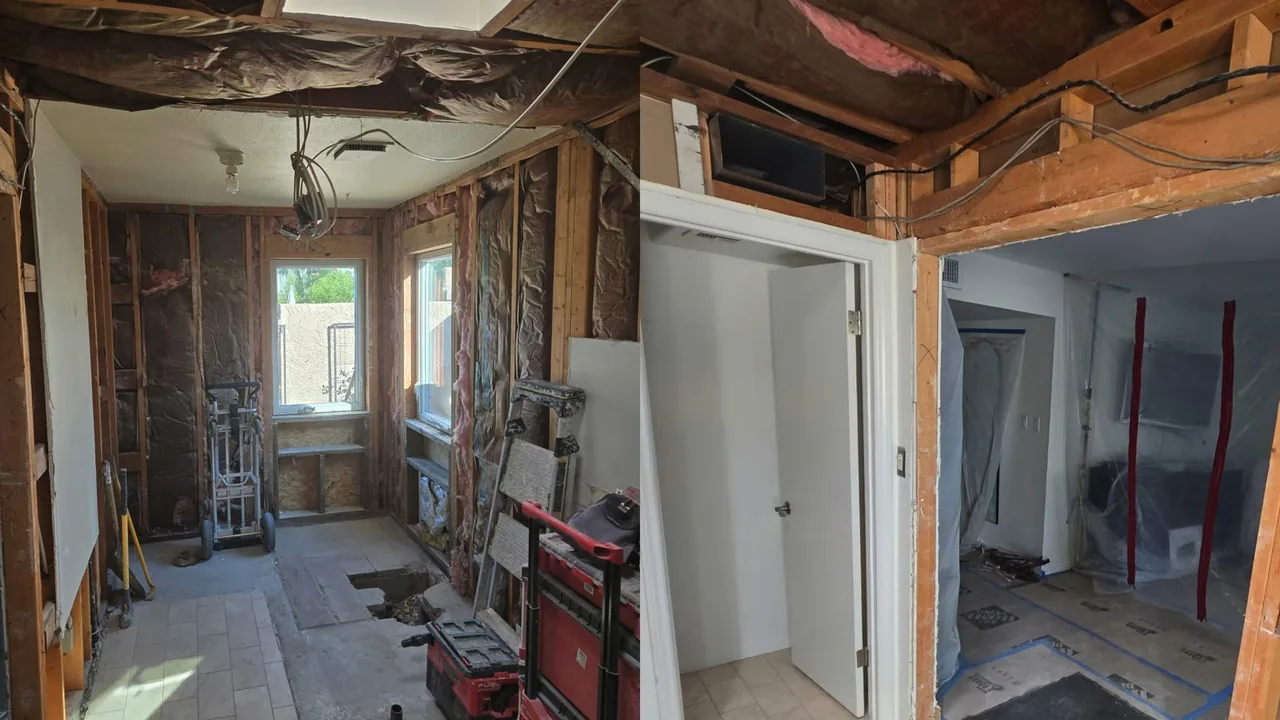
Patch it or replace it? Signs the piping itself is the problem
| What keeps happening | What it may point to | What to check first |
|---|---|---|
| A leak at a different spot every few months | Pipe that is wearing out along its length, not at one joint | Ask the plumber how many leaks the line has had and where |
| Tiny pinhole leaks in copper pipe | Wear from the inside of the pipe | Ask what the plumber thinks caused it and whether more are likely on the same run |
| Low flow at several fixtures, not one | A restriction in the supply lines, or a pressure problem before the house | Compare cold and hot, and check the meter and the pressure at the street side first |
| Water that turns brown or metallic when it sits | Corroding pipe, or something in the supply | Run a cold tap for a minute and see if it clears; tell the plumber what you see |
| Stains or damp spots in walls and ceilings with no fixture above them | A concealed leak | Start with tracing a leak that has no visible source |
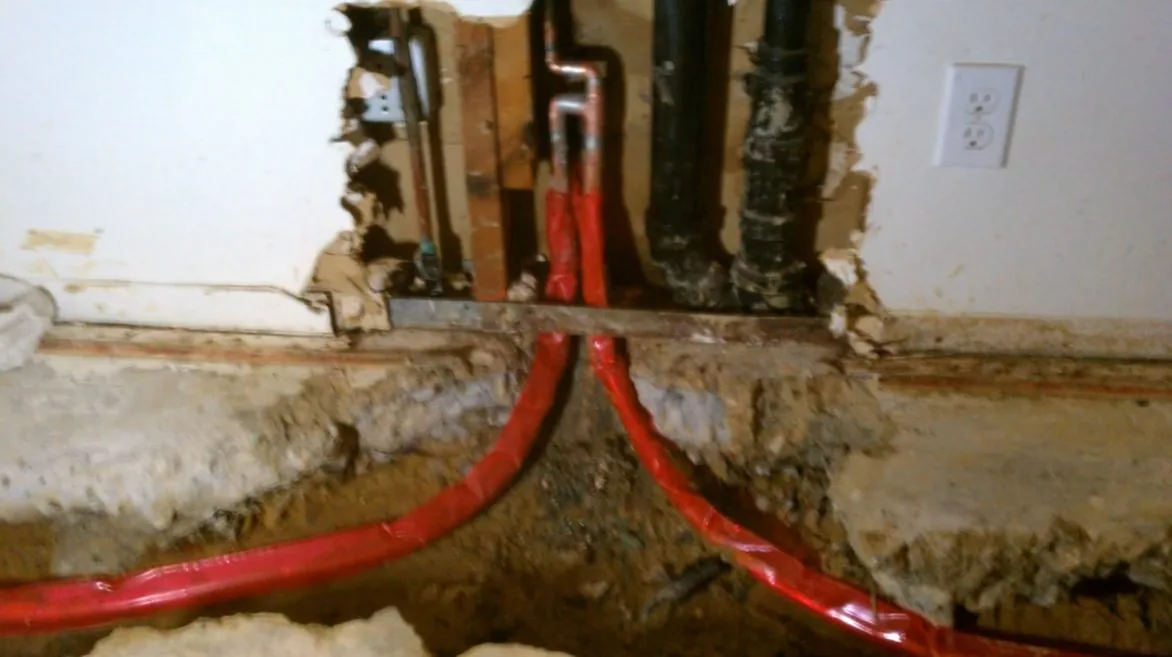
| A leak under the concrete floor | A line that failed under the slab | See slab leaks and the reroute option before deciding on a repipe |
None of these alone says the whole house needs new pipe. A single failed fitting in sound pipe is a repair. The case for replacing more than that builds when failures repeat, when more than one material is involved, or when opening walls for another repair would cost nearly as much as doing the run properly.
Repipe, pipe replacement or pipe repair: which one are you buying?
| Job | What it covers | When it fits |
|---|---|---|
| Pipe repair | One failed length or fitting is cut out and replaced | One leak in otherwise sound pipe |
| Pipe replacement of a run | A whole branch, such as the line from the water heater to the kitchen, is replaced | A run that has failed more than once, while the rest is sound |
| Whole-house repiping | Every hot and cold supply line in the house is replaced | Failures across the system, or a plan to open the walls anyway |
Be sure a quote says which of the three it is. A quote for a repair that grows into a repipe, or a repipe quoted as a replacement of a run, is a different job at a different price. This page covers supply lines, the pipes that carry water to your fixtures. Drains and the line to the street are separate work, covered under repairing the line to the street.
Choosing the material: PEX, copper or CPVC
Three materials come up most often in a repipe quote. We do not rank them here, because the right choice depends on the house and on what the plumber is willing to stand behind. What you can do is ask the same questions about each.
PEX
PEX is flexible plastic tubing that can be pulled through walls with fewer joints than rigid pipe. It is the material most repipe quotes mention first. Ask which fittings the plumber uses and where they will sit, since fittings are where a flexible system can leak.
Copper
Copper is rigid metal pipe joined by soldering. It is the traditional choice and is repaired differently from plastic. Ask how many joints the run will have and how the new copper will be joined to any old pipe that stays.
CPVC
CPVC is a rigid plastic made for hot and cold water. Ask whether it suits the way your house is built, and whether any pipe in the quote will be exposed to cold or heat.
Whatever the material, ask for it in writing, along with what the plumber guarantees and for how long. If an old pipe will stay in service, ask where the new line meets it.
What a repipe involves in your house
- A walk-through and a scope.The plumber counts fixtures, looks at how the walls and ceilings are built and says which lines are being replaced.
- A plan for the water.The water to the house is off while lines are changed. Ask how long it will be off in a day and whether you can stay in the house.
- Access.New lines are run through walls, attics, crawlspaces or ceilings, and some of those have to be opened. Ask where the openings will be.
- New lines and reconnections.Each fixture is reconnected to the new line, and the old lines are removed or capped.
- A pressure test and a walk-through.The system is tested under pressure before it is closed up. Ask to see the result and to run every fixture with the plumber.
Ask who closes the openings and paints, and whether that is in the price. Plumbers often open the wall and someone else closes it, and a quote that does not say which is not complete.
Third leak in the same pipe, or not sure whether to repipe? Tell us how many leaks you have had and where, and what the pipe is made of if you know.
Call (833) 571-0120What Monroe's water and housing age do and do not say about your pipes
Census data shows about 39 percent of Monroe homes were built before 1980, and the median build year is 1989. That tells you roughly when your piping went in. It does not tell you which material was used, and we found no source on which pipe materials are common in Monroe homes. A plumber who sees the pipe can tell you in a minute.
The City of Monroe's 2023 water quality report gives the pH as 7.5 and says the City adjusts pH to reduce corrosion in the distribution piping and in your home. It reports lead and copper as not detected at the 90th percentile in 30 sampled homes, and it lists corrosion of household plumbing as a source of both. It gives no hardness figure. The City's water treatment plant is at 704-282-4668 if you want to ask about the water at your tap.
None of this says your pipes are failing. It does mean that the water, not only the age of the pipe, is part of the question a plumber will ask.
What moves the price of a repipe
A repipe is priced by the house. The same system costs more in a two-story home with finished walls than in a one-story home with open attic access, and a house with four bathrooms has far more lines than one with one. The material, the number of fixtures and how much has to be opened and closed all move the total.
- Size and layout.Square footage, stories, and how the walls and ceilings are built.
- Fixture count.Bathrooms, the kitchen, laundry, hose bibs and the water heater connection.
- Access.Open attic or crawlspace is simpler than finished walls.
- Closing up.Whether wall repair and paint are in the quote or left to you.
The planning range for a whole-house repipe sits on the cost page, with where it comes from. It is not a quote, and a house with difficult access can be above it. Ask for a written scope and compare two quotes line by line.
Permits for a repipe and who may do the work
Inside the City of Monroe, permits come from the City's Building Standards office at 704-282-4524, and its application has a plumbing line. Union County says its Building Code Enforcement office, 704-283-3816, issues building permits in all parts of the county except Monroe and Waxhaw, and that a permit is needed for the addition or change in the design of plumbing. We found no source on whether a particular repipe counts as a change, so ask the issuing office before work starts, and ask the plumber who pulls the permit.
Ask any plumber for license details before work begins. License details are available from us on request before work begins, and the same should be true of anyone you hire. Photograph the work before the walls are closed, and keep the plumber's written description of the scope.
Repiping questions from Monroe homeowners
Should I repipe after one leak?
Not necessarily. One failed fitting in sound pipe is a repair. Repiping becomes worth asking about when the same line has leaked more than once, when failures show up in different places, or when you are already opening the walls. Ask the plumber how many leaks the line has had and why.
What is the difference between repiping and replacing a section of pipe?
A repipe replaces every hot and cold supply line in the house. Replacing a section changes one run, such as the line from the water heater to a bathroom, and leaves the rest. A quote should say which one it is.
Does a repipe include my sewer line?
No. A repipe covers the supply lines that carry water to your fixtures. The drains and the sewer line to the street are separate work, covered on the sewer and trenchless pages.
Will new pipes fix low water pressure?
Only if the pipes are the cause. Low flow at one fixture is usually local, and low pressure through the whole house can come from the supply before the meter or from a leak. Check the cause first, because replacing sound pipe will not fix it.
Who repairs and paints the walls after a repipe?
Ask before you agree to the work. Closing and painting the openings is sometimes in the plumber's price and sometimes left to you, and a quote that does not say is incomplete.
Thinking about repiping a Monroe house?
Tell us how many leaks you have had, where they were and what the pipe is made of, and we will tell you what a plumber would check first.