Trenchless Sewer Repair · Monroe, NC
Trenchless Sewer Repair in Monroe, NC: When Lining or Pipe Bursting Can Replace a Trench
Trenchless repair fixes a damaged sewer line from a few small access holes instead of digging the whole run. It saves a yard, a driveway or a patio when it fits. It does not fit every pipe, and a camera inspection is what tells you which kind of repair your line actually allows.
What trenchless means
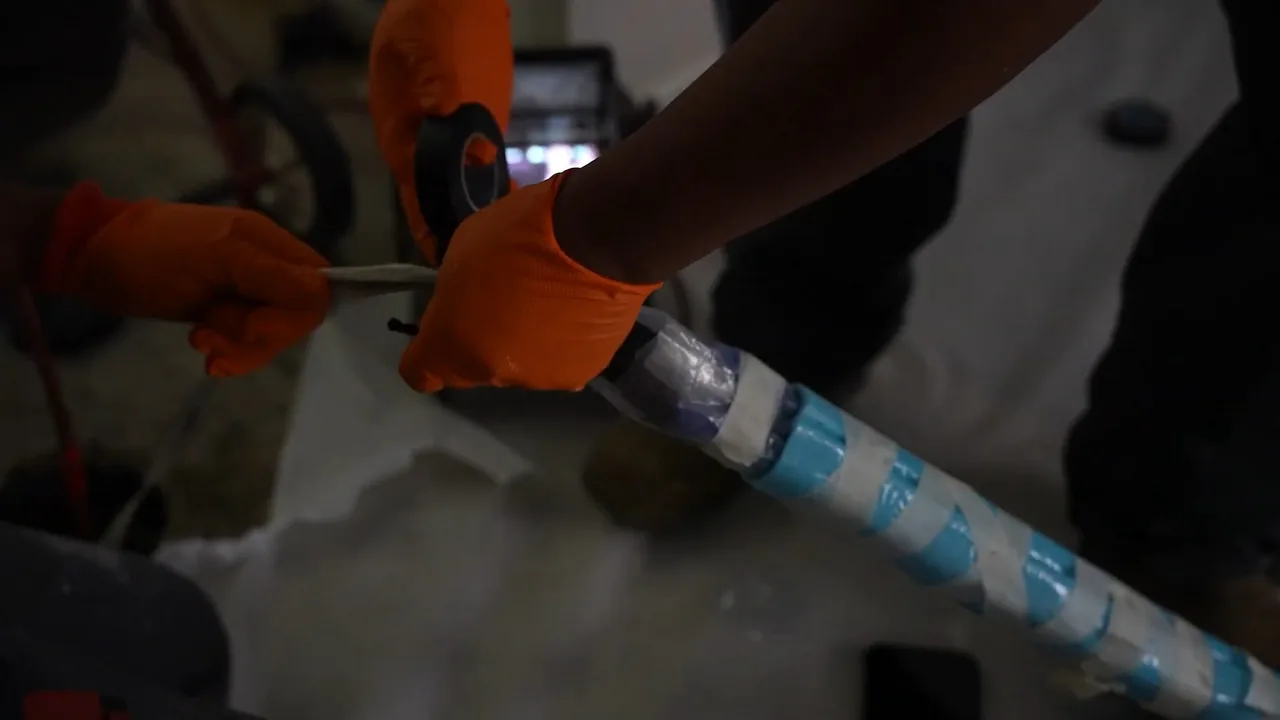
There are two main methods. In trenchless pipe lining (also called relining), a resin-soaked liner is pulled into the old pipe and cured in place, so the old pipe becomes a host for a new one. In pipe bursting, a cone-shaped head is pulled through the old line, breaking it outward while a new pipe is drawn in behind. Both start from access pits at each end, not a trench along the full length.
The City of Monroe uses trenchless methods on its own mains. Its sewer Q&A describes sliplining and pipe bursting among the ways it repairs the roughly 1.7 million feet of pipe it maintains. The City looks after its mains and manholes, while the owner keeps the flow path open from the building through the service connection, so a trenchless repair on your side is a private job.
| Feature | Lining | Pipe bursting |
|---|---|---|
| How it works | A cured liner forms a new pipe inside the old one | The old pipe is broken apart and a new pipe takes its place |
| Pipe size | The new pipe is slightly smaller inside than the old one | The new pipe can be the same size or larger |
| Good fit | A pipe that is intact enough to hold a liner but cracked, rooted or leaking at joints | A pipe too damaged for a liner, such as one that has collapsed or sagged |
| Poor fit | A collapsed or badly displaced line | Where other utilities sit very close to the pipe |
| Digging needed | Small access holes | Small access holes at each end |
When trenchless pipe lining or bursting fits a sewer and when it does not
A camera inspection is the first step, and it is not optional. It shows the condition of the pipe, the depth of the damage, any low spots that hold water, and where the line connects to the City's service connection. Without it, nobody knows which method fits.
- Cracks, root intrusion and failing joints.These are the problems lining handles best, once the roots are cut back so the liner can seat.
- A collapsed section.A liner needs a path to travel through. A collapse usually means bursting or a short open-cut repair.
- A bellied or sagging section.A low spot that holds water can remain a low spot after lining, so ask how the plumber will address it.
- Multiple connections along the run.Branch lines and the connection to the main have to be reopened and sealed after lining. Ask how that is done.
- An old clay or cast iron line.Older materials are common candidates for trenchless work, but the camera decides.
Is the line yours to fix?
This is the question that comes before any repair, and the City answers it clearly. The owner keeps the flow path open from the building through the service connection. The City maintains the mains and manholes. The cleanout, usually a pipe with a white threaded cap near the house or at the edge of the property, is where your responsibility is easiest to see.
If the damage is on the City's side, call the City's Water Resources overflow and blockage line at 704-282-4601 instead of hiring a repair. If it is on your side, the repair is yours, and the plumber should show you on the camera footage where the problem sits. The same question is worked through, in more detail, on what a sewer line repair involves.
A sewer problem and a yard you would like to keep? Tell us what the line has been doing and whether a camera inspection has been done.
Call (833) 571-0120Calling 811 before any digging
Even a trenchless job opens pits at the ends. NC811, reached at 811 or 1-800-632-4949, asks for three working days' notice before digging. It marks public utility lines at no charge, but it does not mark private lines, so ask the plumber how they will locate yours. A pit placed near a buried gas, water or power line without a locate is a safety problem as well as a legal one.
Landscaping, fences and trees
Ask where the access pits will go, who restores the lawn or hardscape, and whether any tree roots near the line are likely to come back. Roots that got in once will look for the same joint again, which is worth discussing even after a lining.
Trenchless repair questions: camera footage, method, connections
- Show me the camera footage.You should see the problem for yourself and be told where it sits along the line.
- Why this method?Ask why lining or bursting suits your pipe, and what the plumber would do if the camera showed something different.
- What happens at the connections?Branch lines, cleanouts and the connection to the City's service line all have to be dealt with.
- What will be dug, and who restores it?Count the pits, and ask what the final surface will look like.
- What about a permit?Union County says plumbing changes need a permit. Inside Monroe the City's Building Standards office takes applications (704-282-4524), and the County (704-283-3816) handles the rest of the county except Waxhaw. Ask whether your repair needs a permit and inspection.
- What documents will I get?Ask for the final camera run and a written description of the work done.
Cleaning first, repairing second
A line is almost always cleaned before it is lined, because a liner needs a clear, smooth path. That cleaning is often done with high-pressure water, and the method is described on cleaning a line with high-pressure water. A line that has been jetted and camera-checked is also easier to judge for repair.
If you do not yet know that the sewer is the problem, start with the symptoms. A single slow fixture points to a branch, while several fixtures that back up together point to the main, and clearing a clogged drain explains how to tell them apart before you spend on a repair.
Trenchless repair questions from Monroe homeowners
Is trenchless sewer repair always the better choice over digging?
No. The answer depends on the pipe, the depth, what is above it and how much of the line is damaged. Ask for the open-cut option and the trenchless option in writing, so you can compare what each includes.
Does a trenchless repair stop roots?
A liner seals the joints and cracks roots enter through, but roots outside can keep growing toward the line. Ask about how the connections are sealed and whether a cleaning schedule makes sense.
Can the City fix my sewer lateral?
The City maintains its mains and manholes, and the owner keeps the flow path open from the building through the service connection. If the blockage is on the City's side, the Water Resources overflow line is 704-282-4601.
Do I need a permit for a trenchless repair?
Union County says plumbing changes need a permit. Inside Monroe the City's Building Standards office takes applications (704-282-4524), and the County (704-283-3816) handles the rest of the county except Waxhaw. Ask whether your repair needs one.
A sewer problem in Monroe?
Tell us what the line has been doing and whether you already have a camera inspection. We will go through the repair options with you.